

The Sustainable Packaging Summit 2025 in Utrecht brought together the global packaging value chain for three days of intense discussions, practical insights, and new connections. The summit gathered more than 800 delegates, over 140 speakers, and close to 90 exhibitors to explore how regulation, innovation, and collaboration can accelerate the shift to a circular packaging economy.
For opesus, this was our first time exhibiting at the Sustainable Packaging Summit – and a great opportunity to introduce our new opesus Packaging Data Collection solution and our expanded partnership with SAP to the packaging community.
Discussions with packaging manufacturers, brand owners, and other software and technology providers quickly converged on the same point: managing packaging data has become a critical challenge, given fast-changing rules like the EU Packaging and Packaging Waste Regulation (PPWR) and other global EPR regulations.
PPWR, EPR, and a New Level of Complexity
Across the main stage and breakout rooms, one topic kept coming back: regulations are moving faster than a company‘s ability to adapt. Effective data management plays a critical role in responding to this.
Panels such as “The 2045 Roadmap“ and “Is regulation setting the conditions for circularity to succeed or fail” asked how decisions made today can help prepare businesses for 2045 and beyond. Speakers from the European Commission, major consumer goods brand owners, and NGOs emphasized that the PPWR is a long-term framework and that short-term targets are not expected to be postponed. Key bans and penalties are scheduled to start applying in 2026, and companies must be ready to prove compliance.
In discussions comparing EU and US approaches to EPR, speakers stressed that regulations should cover the entire lifecycle of packaging and that stakeholders across the chain – from suppliers to recyclers – must be involved. Yet across regions, one common bottleneck emerged: incomplete, siloed, and inconsistent packaging data makes it difficult to measure impact and demonstrate compliance.
From "Necessary Evil" to Strategic Asset: Data as the Missing Link
Brand owners shared how quickly spreadsheets, email exchanges, and ad-hoc tools become unmanageable once PPWR and EPR reporting requirements are mapped out. What used to be “nice-to-have” metrics are now audit-relevant obligations.
At the same time, technology companies underlined that the answer is not just more data, but better data – standardized, connected, and aligned with regulatory definitions. High-quality packaging data is essential for:
- Reliable PPWR and EPR reporting
- Smarter design decisions (e.g. recyclability)
- Clearer internal responsibilities and cross-functional collaboration
- More transparent communication with suppliers and partners
"What If Packaging Data Collection Could Actually Be Easy?"

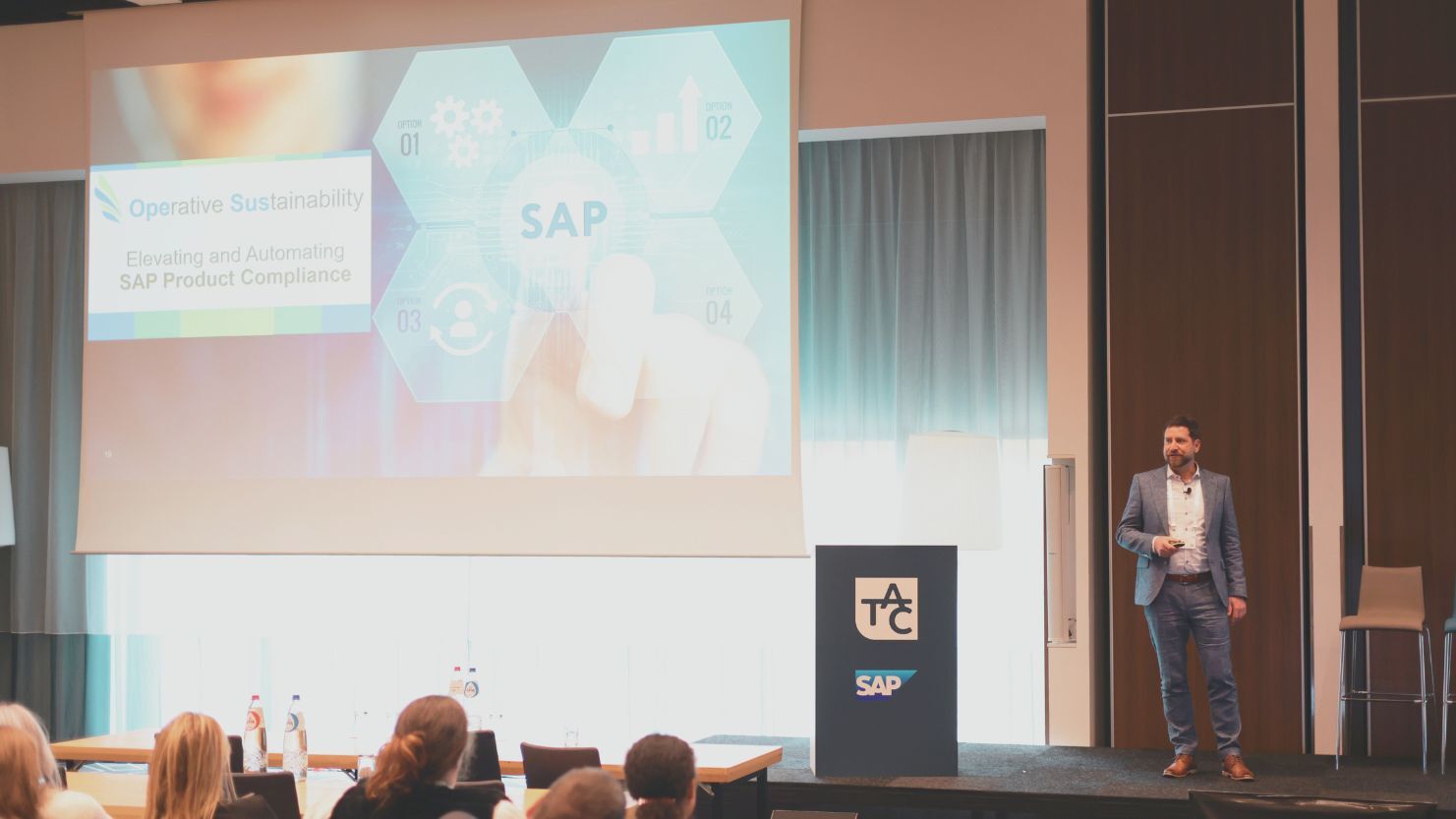
On Tuesday afternoon, our colleague Andrea Costanza brought to the stage “What if packaging data collection could actually be easy?” She explored how companies can move from one-off data hunts to a scalable, repeatable, and increasingly automated packaging data collection process that keeps pace with evolving regulations.
Andrea highlighted three core aspects:
- Current reality: Packaging data is often scattered across PDFs, spreadsheets, emails, and supplier systems.
- Regulatory pressure: Recyclability criteria, substance restrictions, minimum recycled content, and reporting obligations all depend on detailed packaging data.
- A better way forward: Structured, automated data requests that make it easier for suppliers to provide the data, and a central system such as SAP Responsible Design and Production that is designed to support PPWR, EPRs schemes, and internal reporting.
Looking Ahead After Utrecht
The Sustainable Packaging Summit 2025 underlined that many companies are ready to move beyond spreadsheets but are unsure where to start. They want to standardize packaging data collection across markets. In light of PPWR, packaging data is seen as a critical factor and, at the same time, as a strategic asset for achieving their sustainability goals.
If you couldn’t join us in Utrecht, you can learn more about opesus Packaging Data Collection on our website at www.opesus.com/pdc, or reach out to us via our contact form.