phone icon +49 751 768702-40 envelope icon contact@opesus.com
English

opesus Blog

KKDIK 2026 Deadlines

KKDIK 2026: The Two Deadlines You Can't Miss

Two key KKDIK deadlines fall in 2026: 30th September and 31st December. They are only three months apart, leaving very little room to improvise.

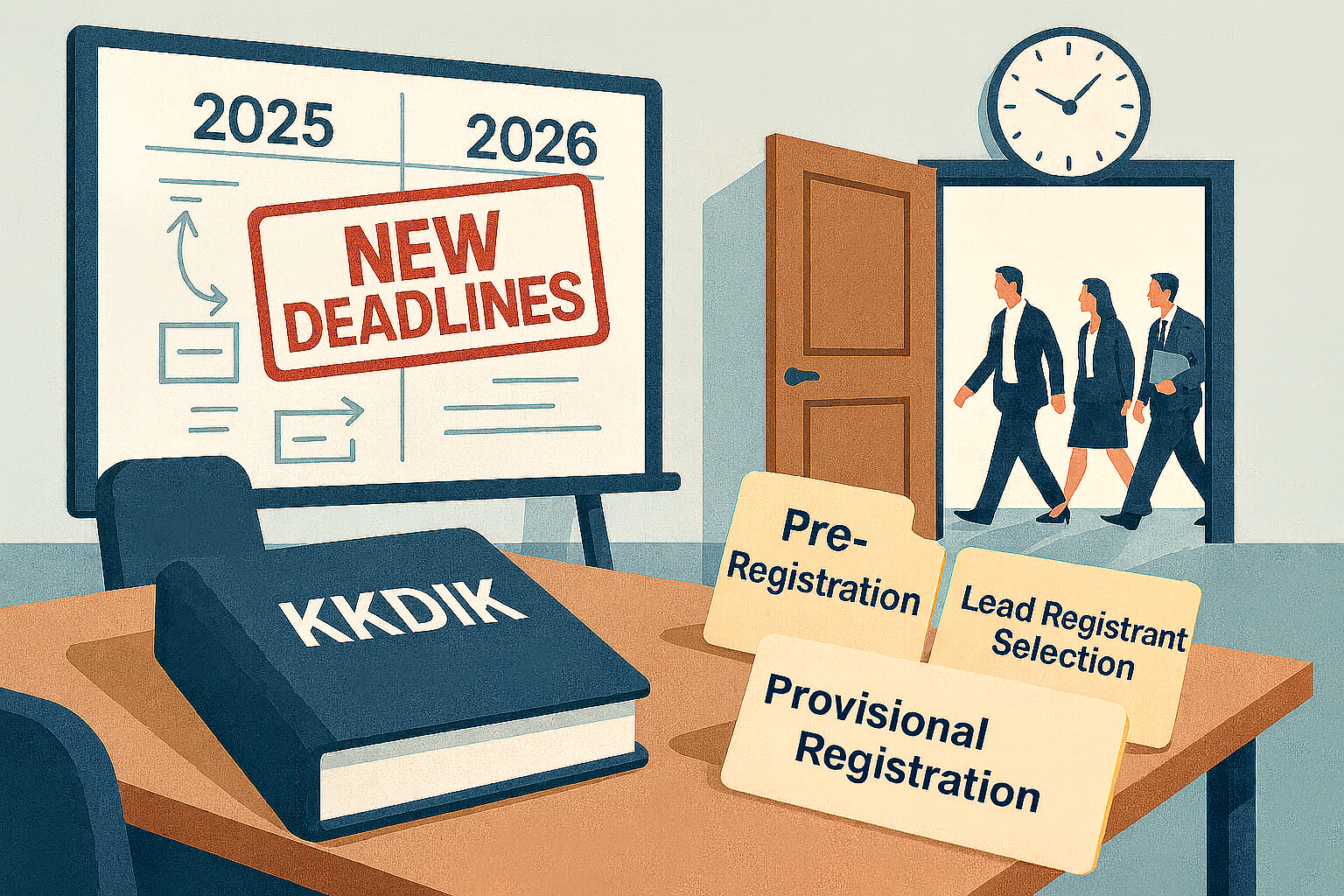
If you place substances on the Turkish market, the rest of this year will decide whether your products can stay there. A recent notice from the Turkish Ministry (MoEUCC) made the September deadline (Provisional Registration) mandatory for every substance, every tonnage band, and every company, with no exceptions, and inspections will begin immediately after. Three months later, the first full registration deadline applies to high-tonnage substances, CMRs, and aquatic hazards.

Read More

PPWR Compliance by 12 August 2026: A Pragmatic Roadmap for the First Regulation Milestone

The 12 August 2026 milestone is the first real test of PPWR readiness, and with the deadline approaching, many companies are still trying to translate the regulation and the recently published Commission Guidance into a workable compliance plan. The honest picture is that not every interpretation point is fully resolved yet. Implementing acts, harmonised standards and national enforcement approaches are still to come. But enough of the framework is already solid to act on.

Read More

The EU PPWR Is Already Here: What You Need to Know and Why It Matters

The European Union Packaging and Packaging Waste Regulation (EU PPWR) marks a major shift toward a circular economy — and it’s not just a gentle steer; it’s a sharp turn around the corner.

No matter where you sit in the supply chain, if you work with packaging, this regulation will affect you. Here’s what you need to know — and why preparing now isn’t just smart, it’s essential if you want to take the turn without spinning off track.

Read More

Swiss Authorities Enforce Product Notifications

Are your hazardous products placed on the Swiss market registered to the Swiss Product Register for Chemicals (RPC)? If not, it's time to take action! Similar to the EU poison center notifications, a unique formula identifier (UFI) is required for Switzerland.

Read More
opesus C&L

CLP Amendment: Impact on Notifications to the C&L Inventory

On 20th November 2024, the Regulation (EU) 2024/2865 was published and is in force since 10th December. It amends Regulation (EC) No 1272/2008 (CLP Regulation) and introduces new requirements for notifications to the Classification and Labelling (C&L) Inventory, which are defined in Article 40. 

All new provisions derived from Article 40 revision shall apply from 1st of July 2026. This also includes amendments to Article 42 concerning the public availability of notifier identities and confidentiality provisions.

Read More
PFAS opesus

Managing PFAS with SAP: Coping with Missing Product Compliance Data

How happy are you with supplier response rates? Room for improvement? Don't worry, you are not alone. Hang in there and learn how to help yourself, leveraging your SAP system, to:   

  • Automate data collection from suppliers 
  • Develop a multichannel strategy, encompassing databases, tools, and networks  
  • Meet suppliers where they are. 

Read More

Data Sharing in the Process Industry: Rules and Principles

There are a number of new REACH-like regulations worldwide, such as Türkiye KKDIK and Korean K-REACH. This number will most likely continue to grow. What does this mean for chemical companies?

This increase in REACH-like regulations demands not only more data, but also places a demand on sharing data among companies. For this reason, chemical companies must improve the way they manage and maintain data across regulations. A key part to efficient data management is to understand the underlying concepts of data sharing.

Read More
PFAS

Managing PFAS with SAP: Unlock Your Data Treasures

If you run SAP ERP and want to tackle PFAS, we have excellent news: your SAP system offers a wealth of treasures – data and information - that you can use:  

  • It records what you purchase, produce, store, and sell. 
  • It knows which components in what quantities make up your products. 
  • It tells you what you buy from whom.  

Discover how to unlockSAPdata using an integrated and sustainable approach to handle PFAS.For insights into current PFAS regulations and their implications for your business, don't miss our initial article about PFAS Regulations and Business Challengesin the series Managing PFAS with SAP. 

Read More
Chemical registration online

KKDIK: A Strategic Approach

The deadlines for KKDIK registration have been extended. This makes it an opportune moment for businesses to evaluate their existing compliance process and strategize for the future. The extra time is valuable. It’s the best time to take proactive steps to streamline processes for registration and ensure a smoother transition.

Read More

KKDIK: Extended Registration Deadlines Are Official!

The Regulation on Chemicals Registration, Evaluation, Authorization and Restriction (“KKDIK”) in Türkiye (Regulation No. 30105) came into force on December 23rd, 2017. The competent authority in Türkiye is the Ministry of Environment Urbanization and Climate Change (MoEUCC).

The KKDIK Regulation established a transitional provision for registration where all substances manufactured or imported into Türkiye at 1 t/a or more had to be registered by December 31st, 2023.

Read More
PFAS regulations

Managing PFAS with SAP: Regulations and Business Challenges

PFAS make product compliance stewards sweat. Companies are at risk of getting fined, lose customers or reputation because of them. The good news for SAP customers:

  • You have most of what you need for a good solution already available
  • You can leverage existing data and processes
  • Your solution can be reliable, auditable, and have a high degree of automation
Read More
SCIP Dissemination Portal what info is available

What the SCIP Dissemination Platform discloses about articles

Having companies submit notifications to the ECHA SCIP database about articles that contain substances of very high concern (SVHC) fulfills one part of the overall goal of the Waste Framework Directive. Through the collection of data via the SCIP database, authorities can monitor the use of SVHCs and take appropriate measures if they wish. In addition to that, the information provided to the SCIP database will be publicly accessible through the SCIP dissemination platform.

Read More

Q & A: Brexit and SCIP Database

It’s been slightly more than a year since the UK left the EU on 31st January 2020. The 11-month transition period ended on 31st December 2020. What does this mean for companies moving their goods between the EU and the UK? This article explores Brexit and the SCIP Database.

Read More